
Blogs
How to Deep Clean Your Shisha Stem, Hose & Base

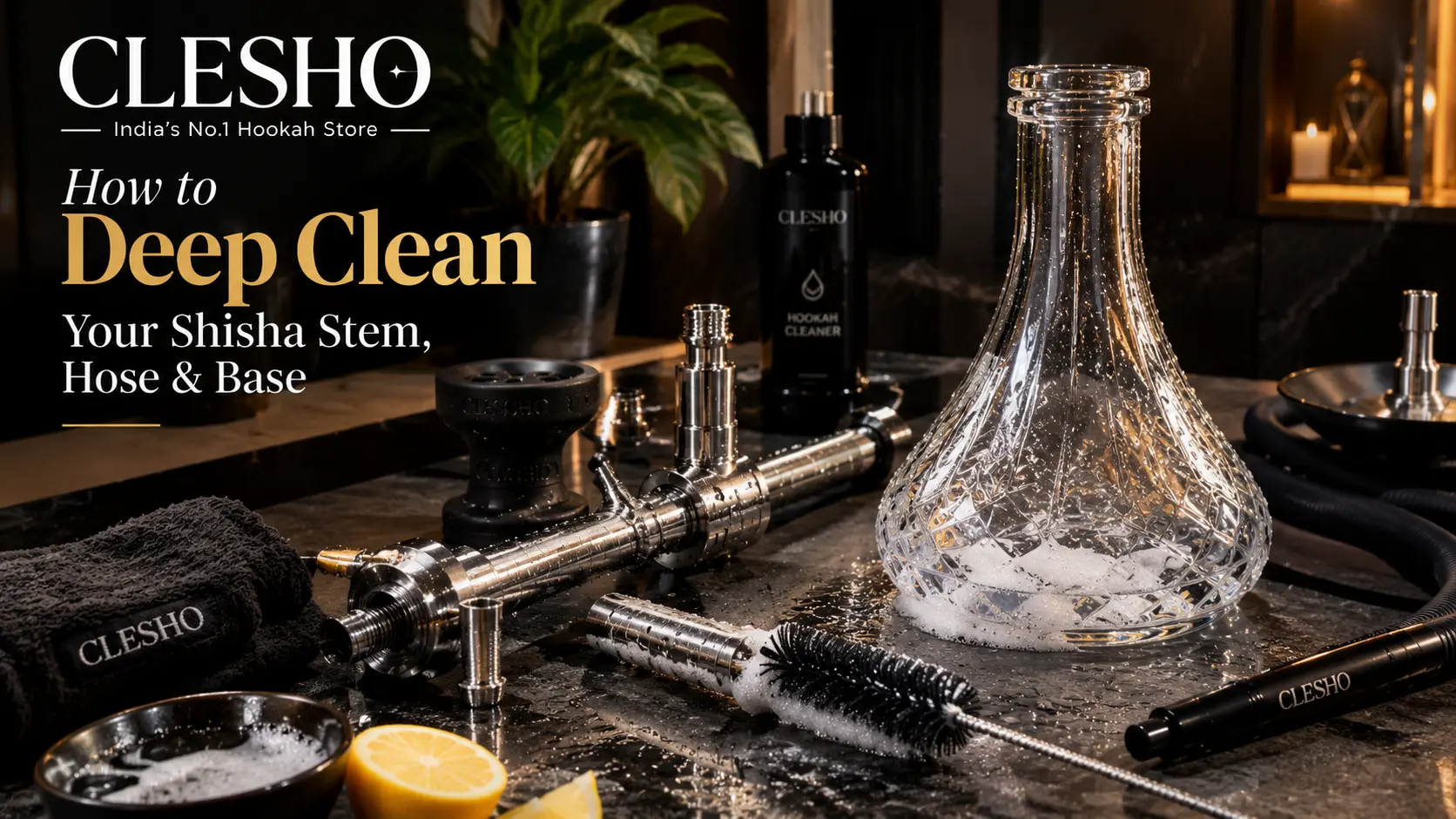
The Ghosting Dilemma: Have you ever packed a fresh, delicate bowl of Blue Mist or Watermelon Chill, only to take your first puff and taste pungent Double Apple or strong Paan from your session three nights ago? That unpleasant lingering taste is called Flavor Ghosting—and it completely destroys the nuanced flavor profile of premium shisha molasses.
Whether you own a modern CNC-machined V2A / 304 surgical-grade stainless steel hookah or an aesthetic brass centerpiece, trapped molasses residues, stagnant water minerals, and trapped micro-bacteria in your hose will gradually degrade your smoking experience.
In this comprehensive maintenance guide, our master lounge technicians at Clesho break down the exact, step-by-step chemical-free deep cleaning routine to keep your pipe smelling factory-fresh, purge valves firing effortlessly, and clouds tasting crisp and pure.
Article Table of Contents
- Why Ghost Flavors Linger: The Science of Residue
- The Golden Rule: What Cleaning Agents to Use (And What to Avoid)
- Step 1: Maintenance of Stainless Steel Hookah Stems & Purge Valves
- Step 2: Scrubbing the Glass Water Base & Eliminating Waterlines
- Step 3: How to Clean Hookah Hoses (Washable Silicone vs. Non-Washable Warning)
- Step 4: Restoring Glazed Phunnel Bowls & Burnt HMDs
- The Recommended Clesho Maintenance Schedule
- Frequently Asked Maintenance Questions
Why Ghost Flavors Linger: The Science of Residue
Hookah molasses is primarily composed of four ingredients: tobacco or herbal leaf cellulose, vegetable glycerin (VG), honey/syrup, and concentrated artificial food flavorings (oils and esters).
When charcoal vaporizes these juices, aromatic volatile organic compounds (VOCs) travel down the inner stem, diffuse through the base water, and exit via the hose. Certain strong profile molecules—especially anethole (licorice/anise in Double Apple), menthol/eucalyptus crystals, and sandalwood/rose extracts in Indian Paan—are oil-soluble and cling aggressively to microscopic crevices inside your hardware.
Rinsing with plain tap water merely removes surface glycerin; it does not break down oil-based flavor bonds. To reset your setup, you need mild organic acids and alkaline neutralizers that dissolve organic residues without oxidizing your premium metalwork.
The Golden Rule: What Cleaning Agents to Use (And What to Avoid)
✅ What You SHOULD Use
- Baking Soda (Sodium Bicarbonate): Odor-absorbing natural alkaline salt that scrubs without scratching polished metal.
- Fresh Lemon Juice: Natural citric acid that dissolves mineral limescale, hard water stains, and licorice oils.
- Distilled White Vinegar: Deep chemical reset for stubborn Paan odors (used in a 1:4 dilution ratio).
- Lukewarm Water (40°C - 50°C): Safe temperature that liquefies solidified glycerin without cracking thick glass.
❌ What You Must NEVER Use
- Dishwashing Soap / Detergents: Leaves behind chemical soapy film inside silicone hoses and matte stems that ruins future sessions.
- Bleach or Chlorine: Pits stainless steel, removes anodized finishes, and releases toxic vapors when heated.
- Boiling Water on Glass: Thick hookah glass bases cannot handle thermal shock and will instantly crack or shatter.
- Abrasive Steel Wool: Destroys mirror-polished V2A stainless steel and strips defensive anti-corrosive passivations.
Step 1: Maintenance of Stainless Steel Hookah Stems & Purge Valves
The downstem and upper heart form the central chimney of your hookah. Over time, condensed shisha syrup collects along the interior channel, forming a sticky amber varnish.
The Step-by-Step Stem Protocol
- Complete Disassembly: Unscrew the downstem from the heart chamber. Remove the diffuser, the charcoal ash tray, and all threaded purge valve caps.
- Clean the Purge Bearing: Inside your purge ports are tiny plastic, ceramic, or stainless steel ball bearings. Soak them in warm lemon water and clean the valve seat with a cotton ear swab. Sticky purge valves cause pressurized blowouts and flooded chillums!
- The Baking Soda Flush: Seal the bottom of the stem with your thumb. Spoon two tablespoons of pure baking soda into the top opening, pour in 30ml of fresh lemon juice, and let the foaming chemical reaction liquefy inner oil films for 60 seconds.
- Pass the Long Shaft Brush: Insert an elongated nylon hookah stem brush. Vigorously scrub up and down through the full length of the pipe at least 10–15 times until the bristles emerge completely clear.
- Thorough Lukewarm Rinse & Dry: Flush with warm running water. Always wipe down with a microfiber towel and let dry disassembled. Never store threaded stainless steel parts wet to avoid mineral seize.
Step 2: Scrubbing the Glass Water Base & Eliminating Waterlines
Ever notice a persistent cloudy white ring or yellowish tint on the inside of your crystal shisha vase? That is calcium carbonate limescale binding with aromatic tobacco oils.
The Pro-Lounge Base Reset Formula:
1. Dump stagnant water immediately after every smoke session. Never let dirty water sit overnight.
2. Pour ¼ cup of coarse sea salt (or raw dry rice) into the dry base.
3. Add ½ cup of white vinegar and 1 cup of warm water.
4. Swirl and shake the mixture clockwise for 90 seconds. The coarse salt particles act as micro-abrasives that scour away mineral scale without scratching the crystal glass interior.
5. Use an angled curved base brush to hit the bottom corners where sticky molasses gathers, then rinse 3 times with cold water.
Step 3: How to Clean Hookah Hoses (Washable Silicone vs. Non-Washable Warning)
The hose is responsible for over 80% of all trapped ghost odors. However, washing the wrong type of hose can be hazardous to your health.
⚠️ The Fatal Rust Trap: Traditional Leather/Cardboard Hoses
Traditional braided or velvet hoses (frequently supplied with cheap traditional pipes) contain a hidden internal metal spiral wire. NEVER wash these with water. Running water through a non-washable hose causes the internal steel wire to rust within 24 hours. The next time you inhale, you will literally be pulling rust particles and rotted cardboard spores directly into your lungs!
How to Wash Food-Grade Medical Silicone Hoses:
Modern luxury setups, like those engineered at Clesho, exclusively utilize food-grade matte silicone tubing with aircraft-grade aluminum handles. These are 100% washable and impervious to corrosion.
- The Funnel Rinse: Remove the metal handle and connector piece. Place one end directly under a warm high-pressure faucet, letting clear water blast through the tube for 2 minutes.
- The Lemon Swish: Dissolve 2 tablespoons of concentrated lemon juice or citric acid powder into 250ml of warm water. Pour it through the hose, pinch both ends shut with your thumbs, and vigorously slosh back and forth like a jump rope.
- The Centrifugal Spin: Take the hose outdoors or into your bathroom, hold the center securely, and spin it around like a lasso for 30 seconds. Centrifugal force instantly expels trapped moisture beads from the silicone interior.
- Hang Vertical to Dry: Always hang your silicone hose over a shower curtain rod or coat hanger vertically. Allowing water to pool flat causes mold growth.
Step 4: Restoring Glazed Phunnel Bowls & Burnt HMDs
When charcoal burns molasses onto the bottom vents of your Heat Management Device (HMD) or around the rim of your clay phunnel bowl, it carbonizes into rock-hard black crusts. This crust emits a foul, bitter scorched taste during preheating.
The 15-Minute Carbon Removal Trick:
1. Submerge your aluminum HMD (Lotus style) in a bowl of hot tap water with 1 teaspoon of baking soda for 15 minutes. This softens the rock-hard baked molasses.
2. Take a brass wire cleaning brush or the rough green side of an abrasive sponge and scrub the bottom nubs. The burnt crust will peel off in soft flakes without stripping the base metal.
3. For glazed ceramic and clay phunnels, gently rub the rim with warm water and a scouring pad. Never plunge a scalding hot clay bowl directly into cold water—the thermal shock will spider-crack your ceramic glaze!
The Recommended Clesho Maintenance Schedule
You don't need to perform a laboratory-grade chemical teardown every single day. Follow this straightforward lounge schedule to maintain peak cloud output:
| Frequency | Components Cleaned | Method |
|---|---|---|
| After Every Session | Base Water, Bowl & Ash Tray | Dump old water, rinse vase with fresh water, dispose of spent tobacco pack, wipe tray. |
| Every 3–4 Sessions | Downstem, Purge Ball & Hose | Full stem brush sweep, check purge valve mobility, flush silicone hose with warm water. |
| Monthly Deep Reset | Entire Rig + Threading + Base | Baking soda + lemon fizz soak, coarse salt scrub for base, lubricate rubber O-rings. |
Upgrade to Maintenance-Free Smoking Hardware
Tired of rusty traditional hoses and flimsy stems that retain stubborn ghost flavors forever? Explore Clesho's premium collection of surgical 304 Stainless Steel Hookahs, German-grade Washable Silicone Hoses, and Heavy-Duty Long Shaft Brushes engineered for effortless cleaning and crisp flavor purity.
Explore Premium Clesho HardwareFrequently Asked Maintenance Questions
Q: Can I put my hookah glass base in the dishwasher?
No. Dishwashers use high-heat cycles and abrasive caustic detergents that can strip external frosted coatings, crack thick structural glass due to heat expansion, and melt delicate rubber grommets. Always hand-wash your base with lukewarm water and a bottle brush.
Q: How do I remove the stubborn smell of Paan Raas from my silicone hose?
Indian Paan contains potent clove, rose, and betel leaf extracts that permeate silicone deeply. Submerge your silicone hose in a bucket of warm water mixed with ½ cup white vinegar and 2 squeezed fresh lemons for 2 hours. Afterwards, rinse thoroughly with warm water. Many seasoned lounge smokers keep one dedicated hose solely for Paan and spice blends.
Q: Why has my stainless steel hookah developed white chalky deposits inside the stem?
Those chalky patches are calcium carbonate and mineral salts from hard tap water, not rust. High-grade 304/V2A stainless steel does not oxidize under normal water exposure. Run a stem brush soaked in warm lemon juice or white vinegar through the pipe; the mild acid instantly dissolves mineral scale and restores mirror shine.